

If you’ve been Googling laser treatment for a pilonidal cyst, you’ve probably ended up more confused than when you started. Different pages and forums talk about operations, whether anesthetics should be used, SiLaC and other things that only add up to the confusion.
That’s because “laser” here means two completely different things, and it’s important to separate them.
In short, laser hair removal is prevention. It doesn’t treat a cyst you already have, but evidence shows that it reduces the risk of a pilonidal cyst from recurring.
Laser surgery (usually called SiLaC or SiLaT) is an actual procedure that destroys the tract with a fiber. It’s widely praised due to it’s fast recovery and low recurrence rates (around one in ten, depending on which study you read).
Side by side comparison of the two lasers
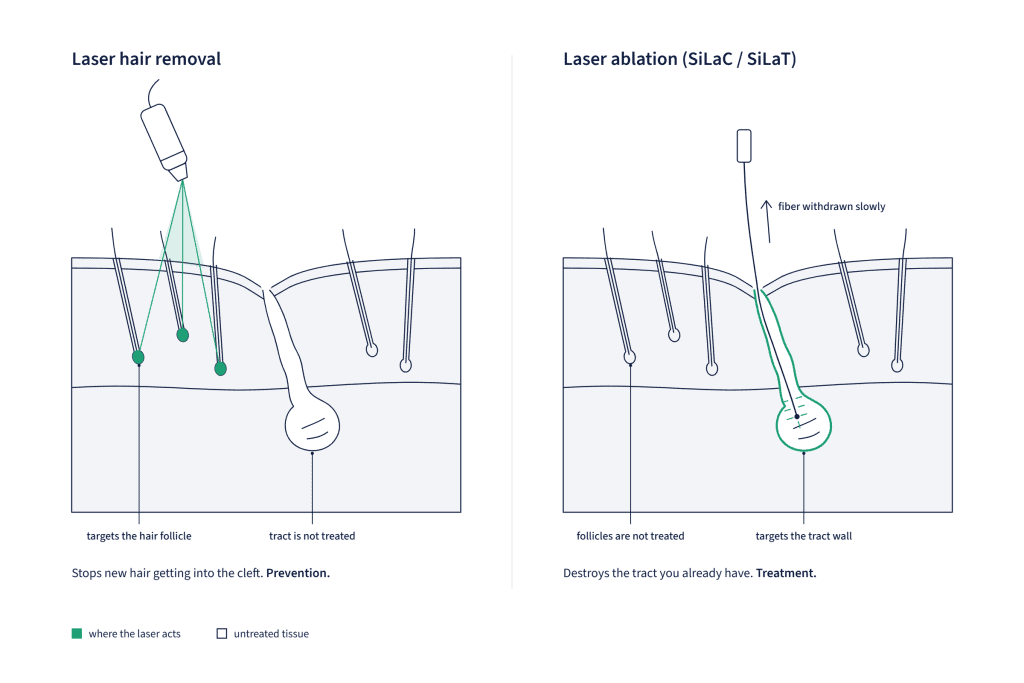
Same anatomy in both panels. The only thing that changes is where the laser is aimed.With a laser hair epilation, a dermatologist or a laser clinic treats the skin over and around the natal cleft. The laser targets pigment in the hair follicle and disables it. You’ll need several sessions because hair grows in cycles and only the follicles in the active phase respond each time. The goal is to remove the raw material that causes the problem in the first place.
On the other hand, a laser ablation of the sinus is a bit different. Here a surgeon threads a thin radial laser fiber into the sinus tract and withdraws it slowly, burning the lining of the tract as it goes. The tract collapses and scars shut.
This goes by a few names depending on the manufacturer and the surgeon: SiLaC, SiLaT, PiLaT, or just laser ablation.
To put it simply: hair removal works on the outside of your skin, while ablation works inside of the tract.
Laser hair removal, and what the research actually shows
This one usually surprises people, because hair removal sounds cosmetic and optional (but it actually isn’t).
Pilonidal disease is a reaction to hair getting driven into the skin of the natal cleft, where your body walls it off as a foreign object. Take the loose hair out of the equation and you’ve removed the fuel. That’s the whole logic, and it’s the reason this shows up in surgical guidance rather than just in beauty clinics.
The American Society of Colon and Rectal Surgeons includes shaving or laser epilation of the gluteal cleft in its clinical practice guideline, as a primary or an add-on treatment, with the exception of cases where there’s an active abscess.
The stronger evidence is a systematic review and meta-analysis of randomized trials looking specifically at recurrence after laser hair epilation. Pooling three randomized controlled trials, it found a significant reduction in recurrence, with an odds ratio of roughly 0.32. In plain terms, the odds of the disease coming back were about a third of what they were without epilation.
That comes from randomized trial data, which is about as good as evidence gets in a condition this under-studied.
For context on why that matters, the same review notes that long-term recurrence of pilonidal disease past the five year mark sits around 22%, and that most recurrences turn up within the first four years. That’s a long window to protect, and for most people it covers their twenties and thirties.
How many sessions, and does it last
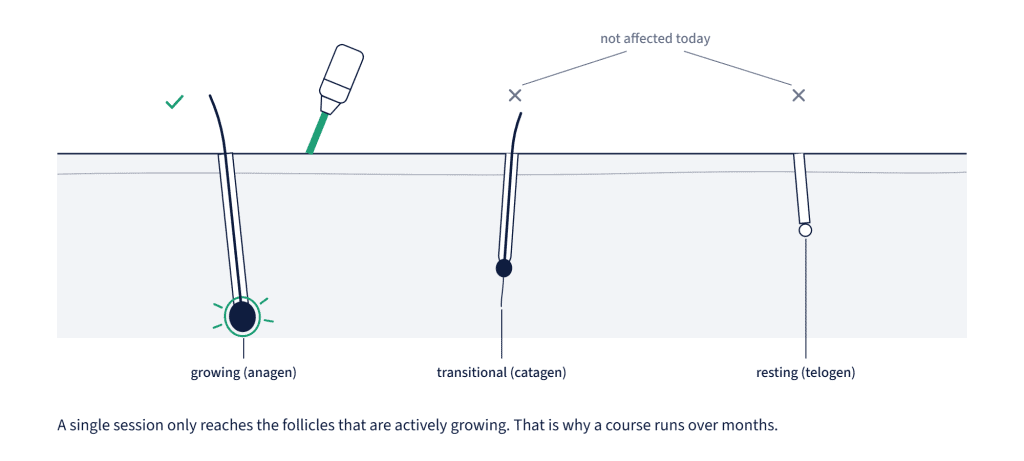
Expect a course of sessions spread over months rather than a single appointment, because the laser only affects follicles that are in the growing phase on the day. Most clinics also recommend occasional top-ups afterwards, since some follicles recover over time.
Two honest caveats your clinic may not lead with. Laser epilation works on the contrast between dark hair and lighter skin, so it’s less effective on very light, red, or grey hair. And it won’t touch a cyst you already have. If you’re mid-flare, this is a conversation for later.
Laser surgery, and what actually happens in the room
Laser ablation is usually done as a day procedure. The surgeon cleans out the tract, sometimes removes the midline pits separately, then passes a radial laser fiber along the tract and withdraws it while it fires. The tract is destroyed from the inside rather than cut out, which is why the wound left behind is tiny compared to a traditional excision.
That’s why people go looking for it. No large open wound, no weeks of packing, and in most published series people are back on their feet quickly.
A single-center series reported patients getting back to regular activity in around 18 days on average, with complete healing taking roughly six and a half weeks, and just over 95% of wounds healing without complications. A study on recurrent disease reported a median return to normal activities of one day, with wound healing taking around 35 days.
Compare that to a wide excision left open to heal, where you’re looking at months of dressing changes, and you can see why this option gets people’s attention.
How often it comes back
The current published figures vary a lot and it mostly depends on the study.
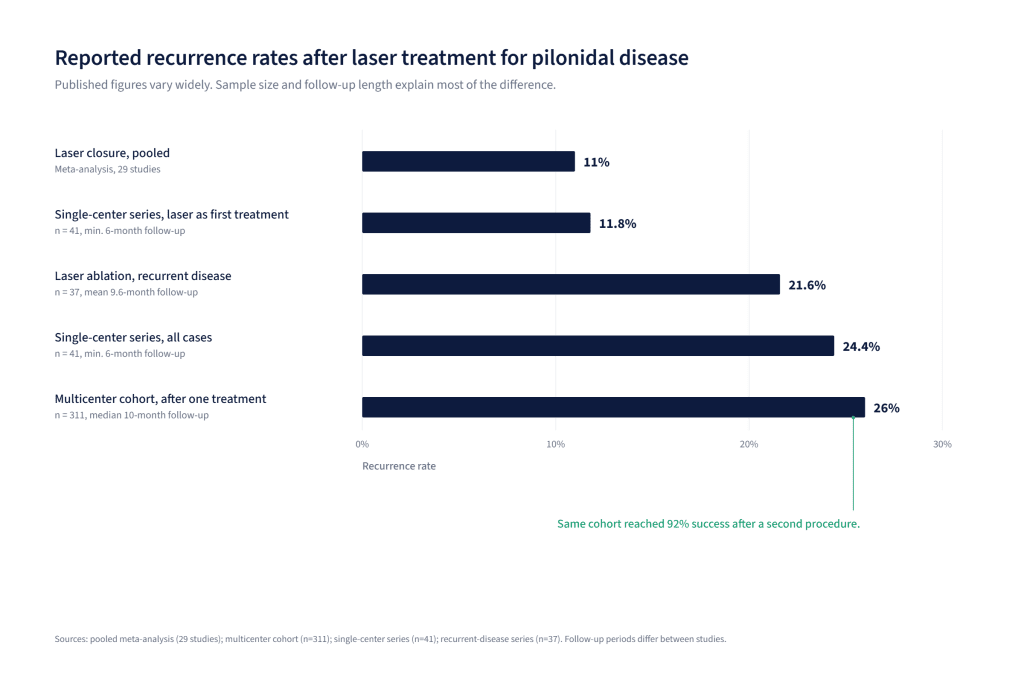
Sample size and follow-up length explain most of the spread. The 26% figure comes from 311 patients, the 11.8% from 41.- A systematic review and meta-analysis of 29 studies found a pooled recurrence rate of about 11% for laser closure, with a complication rate around 10% and average healing around 30 days. The comparable endoscopic technique came out at about 9% recurrence.
- A multicenter cohort of 311 patients in the Netherlands found 26% recurrence after a single laser treatment, giving an initial success rate of about 66%. Crucially, that climbed to roughly 92% after a second procedure and 98% after a third.
- A single-center series reported overall recurrence of about 24%, dropping to around 12% when laser was the first thing tried rather than a rescue after previous surgery.
- A series in patients with recurrent disease found about 70% fully healed with no recurrence, and around 22% recurring over a mean follow-up of under a year.
We have many different numbers here, but which one of them is true? The answer is all of them, for different patients.
Two patterns run through the data and they’re the useful part. Laser does better as a first treatment than as a rescue after previous surgery has failed. And a single session often isn’t the finish line.
The cohort that reported 26% recurrence after one treatment also reported that repeating the procedure got most of those people to healed. If you go in expecting one appointment and done, a second round feels like failure. If you go in knowing it’s sometimes a two-step, it feels like the plan.
It’s worth knowing that one analysis of factors behind success found results were worse in patients with obesity and in those with more advanced disease. If either applies to you, that’s a fair thing to raise directly with the surgeon.
Laser versus traditional surgery
It’s hard to say that one is simply better than the other, but laser ablation is considered to be a gentler and more modern approach .
Traditional excision removes the diseased tissue physically. It’s the more definitive approach, it’s been done for decades, and cleft-lift style procedures in particular have a strong track record. The downside here is that you will have a real wound, real downtime, and, with midline closure, a meaningful chance of the wound breaking down.
Laser ablation is gentler on your calendar and your body. The wound is generally small, and you’re mobile almost immediately. The cost is that it’s less definitive, you may need it more than once, and the evidence base is younger and more varied than for conventional surgery.
Laser buys you an easier recovery, but you will likely require more than one visit.
So which one should you choose?
The answer depends on whether your priority is getting it over with permanently or getting back to work on Monday. Our guide to pilonidal cyst treatments will walk you through all of the possible treatments and hopefully help you make an easier decision.
Cost and insurance
The cost will completely depend on which method you choose here, as well as your insurance policy.
Laser surgery is a surgical procedure performed by a surgeon for a diagnosed medical condition, so it usually goes through insurance the way any other pilonidal operation does. What you pay comes down to your plan rather than the technique. What varies is whether a given surgeon or center offers it, since not every practice has the equipment.
Laser hair removal is the awkward one. It’s the same machine cosmetic clinics use, so plans frequently classify it as cosmetic and decline it, even though it’s in a surgical society’s guideline as a treatment. Coverage varies by insurer and it often comes down to how the claim is coded and whether your surgeon documents it as recurrence prevention rather than as hair removal.
If you want a shot at getting it covered, go through your surgeon’s office rather than booking yourself into a med spa. A referral with a diagnosis attached is a different document to a spa receipt.
Prices for self-pay hair removal vary enormously by city, clinic and number of sessions, so ask for a full course price rather than a per-session one, and ask what top-ups cost after the initial course.
Questions worth asking before you agree to anything

Clinic consultations are short and it’s hard to think of the right question on the spot. These are the ones that actually change the picture.
- How many of these have you done? Laser ablation results improve with the surgeon’s experience.
- Is this my first treatment, or am I coming to you after a previous procedure failed? Ask how that changes my odds.
- If it recurs, what’s the plan? Repeat laser, or something else?
- Are you removing the midline pits as well, or only ablating the tract?
- Do you recommend hair removal alongside this, and can your office help me get it covered?
- Realistically, when am I back at a desk, and when am I back at the gym?
That last one matters more than people expect, because “back to activity” in a study and “back to your actual job” aren’t always the same thing.
When laser isn’t the right call
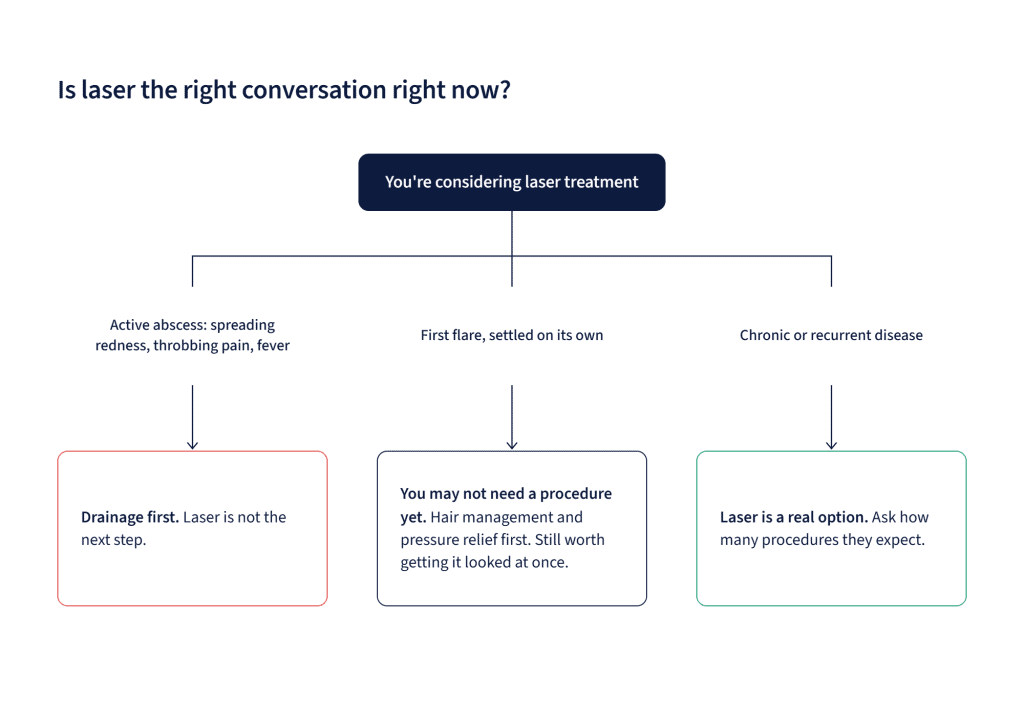
If you have an active abscess right now, with spreading redness, throbbing pain or a fever, laser is not your next step. That needs drainage first, and surgical guidance specifically excludes epilation while an abscess is present. Get seen.
If this is your first ever flare and it settled on its own, you may not need any procedure yet. Plenty of people manage a quiet pilonidal dimple for years with hair management and keeping pressure off the area.
And if you’ve already had two or three procedures fail, laser as a fourth attempt is a harder sell than laser as a first choice, based on the data above. That’s a conversation for a specialist colorectal surgeon rather than a general one.
Does laser hair removal actually help a pilonidal cyst?
For prevention, yes, and the evidence is unusually good for this condition. A meta-analysis of randomized trials found laser hair epilation cut the odds of recurrence to roughly a third. It does not treat a cyst you currently have, though. It removes the hair that causes new ones.
What’s the difference between laser hair removal and laser surgery for a pilonidal cyst?
Hair removal treats the skin surface to stop hair falling into the cleft, and it’s prevention. Laser surgery, often called SiLaC or SiLaT, threads a laser fiber into the sinus tract and destroys it from the inside, and it’s treatment. You’d see a different practitioner for each, and they’re doing different jobs.
How successful is laser surgery for a pilonidal sinus?
Published recurrence rates range from around 9% to 26% depending on the study and the patient. A pooled analysis of 29 studies put it near 11%. Results are better when laser is the first treatment rather than a rescue after previous surgery failed, and repeat laser procedures push overall success rates well above 90%.
Will insurance cover laser hair removal for a pilonidal cyst?
Sometimes, and it usually depends on documentation. Many plans treat laser hair removal as cosmetic by default. Going through your surgeon’s office, with the diagnosis attached and the treatment documented as recurrence prevention, gives you a far better chance than booking it yourself at a cosmetic clinic.
How long does recovery from laser pilonidal treatment take?
Faster than conventional excision. Published series report a return to normal activity anywhere from about a day to around 18 days, with the wound itself typically closing over roughly four to six weeks. Your own timeline depends on how extensive the disease was.
Can laser hair removal prevent a pilonidal cyst from coming back?
That’s exactly what the evidence supports. Randomized trial data shows a significant drop in recurrence with laser epilation, and it appears in surgical society guidance as a primary or adjunctive option. It’s one of the few things in this condition with that level of backing.
Is laser better than surgery for a pilonidal cyst?
Neither is simply better. Laser gives you a much easier recovery and keeps your anatomy intact, at the cost of a higher chance you’ll need it done again. Conventional excision is more definitive up front and asks for a much harder few weeks. The right answer depends on which cost you’d rather pay.
Bottom line
If you take one thing from this page, take the distinction. Laser hair removal stops new hair getting into the cleft, and randomized trial evidence says it meaningfully cuts your odds of a repeat. Laser ablation destroys the tract you already have, with an easier recovery than conventional surgery and a real chance you’ll need a second round.
Most people who do well with this end up doing both. One deals with the tract you already have, the other with the hair that would otherwise start the next one.
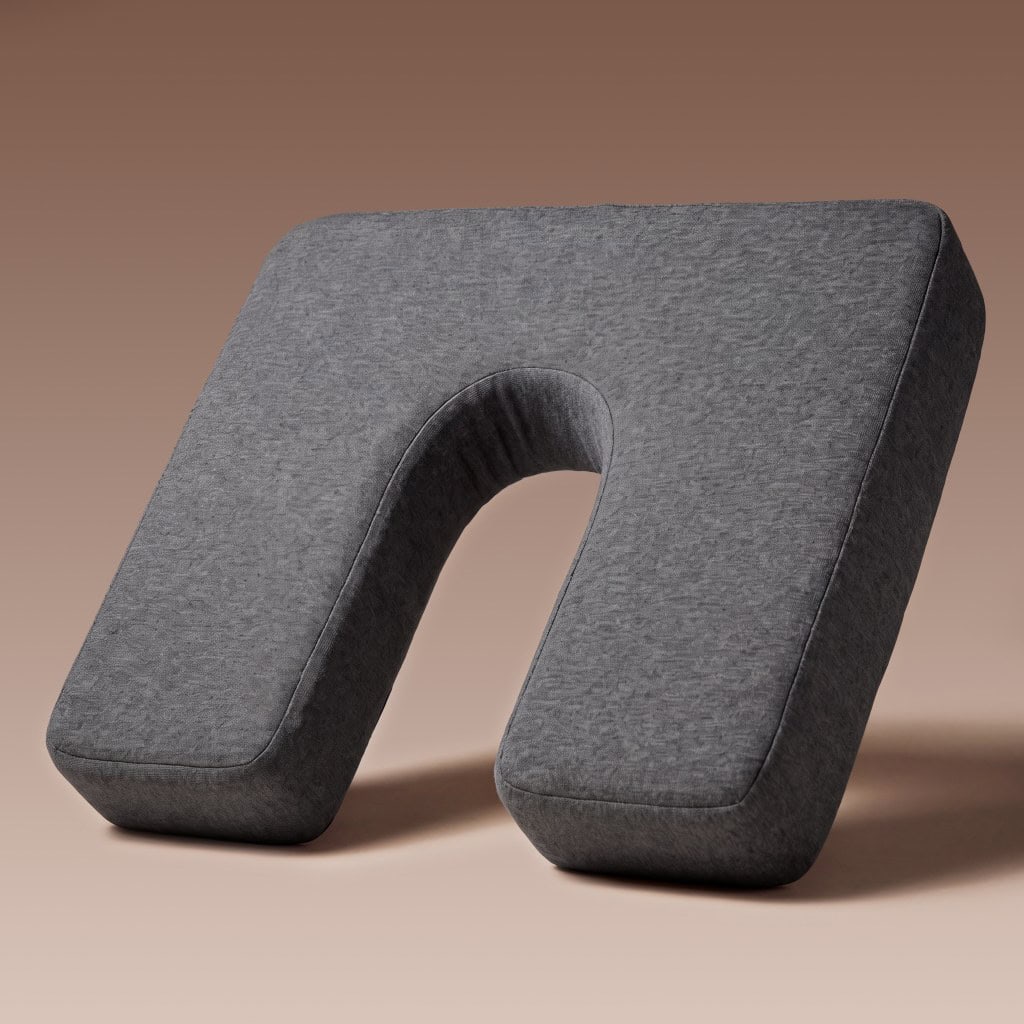
Whatever route you pick, the sitting part doesn’t sort itself out. Keeping pressure off the area is worth getting right while you heal and afterwards. Our guide to sitting with a pilonidal cyst covers that.
Leave a Reply