

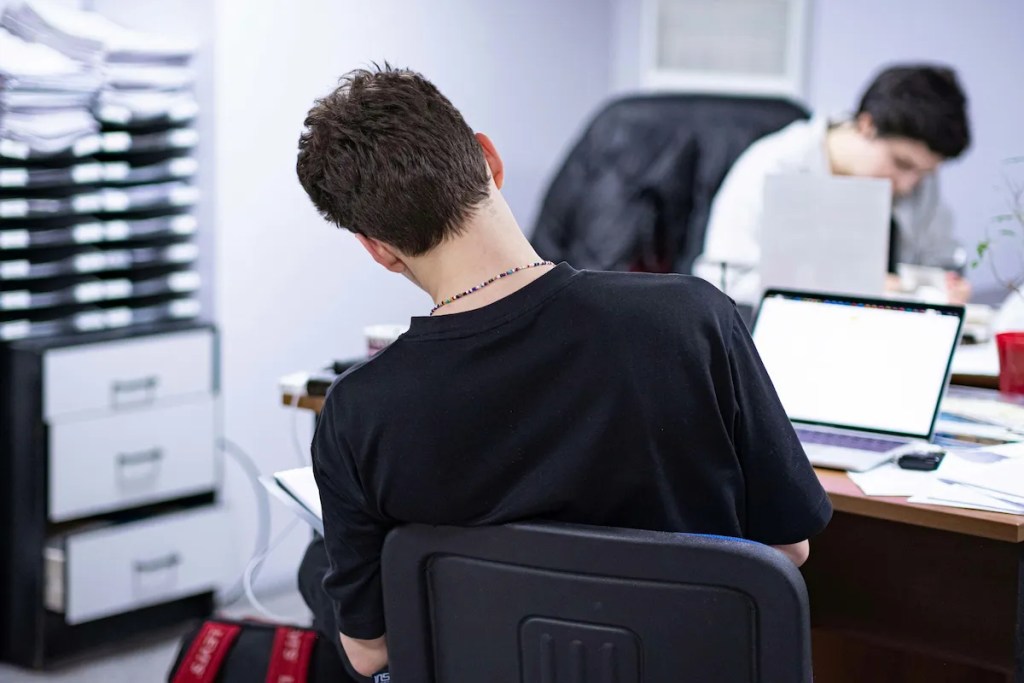
If you have a pilonidal cyst, sitting in a meeting for even ten minutes can make you already dread the chair. Every time you sit down, that spot at the top of your tailbone reminds you it’s there, and by the end of the day you’re shifting around like the seat is made of gravel.
But sitting doesn’t have to be this bad. Most of the advice online gets one thing wrong, though, and it’s the thing people spend money on: the donut pillow. Here’s how to actually sit through a workday, and how to tell when the pain has stopped being a nuisance and become a problem.
Quick answer: how should you sit with a pilonidal cyst?
Lean slightly forward or shift your weight onto one buttock so it rests on your thighs and sit bones instead of your tailbone area. Use a soft surface or a cushion with a rear cutout, stand up every 20 to 30 minutes, and avoid hard chairs entirely during a flare-up.
Why sitting hurts so much
A pilonidal cyst forms at the top of the crease between your buttocks, right where your body weight concentrates when you sit. Sitting presses the inflamed tissue against the seat, and every small movement adds friction on top of the pressure. That’s why a chair that felt fine last month can feel unbearable during a flare-up.
Hard surfaces make it worse because there’s nothing to spread the load. A wooden chair, a stadium bleacher, or a long car ride puts your full weight on a small area of already irritated skin. According to the Cleveland Clinic, pressure and friction on the area are exactly what aggravates pilonidal disease, which is why the condition is so common in people who sit for a living.
Can sitting too long cause a pilonidal cyst?

Sitting alone doesn’t create the cyst. The root cause is hair and debris getting trapped under the skin, where your immune system walls it off. But long hours of sitting are one of the best documented risk factors, because constant pressure and friction help drive loose hairs into the skin and keep the area warm and damp.
There’s a reason this condition was nicknamed “Jeep disease” during World War II. Thousands of soldiers who spent their days bouncing around in vehicle seats developed pilonidal cysts, and army doctors noticed the pattern. The Mayo Clinic still lists prolonged sitting and occupations that require it among the main risk factors today.
So if you drive for work or spend eight hours at a desk, sitting didn’t give you the cyst by itself. It did stack the odds against you, and it’s probably making your current one angrier.
The best sitting position for a pilonidal cyst

There isn’t one magic posture, but the ones that work all do the same thing: get your weight off the tailbone area and onto your thighs and sit bones.
The forward lean. Sit toward the front half of the chair, feet flat on the floor, and tilt your upper body slightly forward. This rolls your pelvis so your weight lands on your thighs. It’s the single most reliable position during a flare-up, though your lower back will want breaks from it.
The side shift. Lean onto one buttock so the inflamed area lifts off the seat, then switch sides every 10 to 15 minutes. Works well for car rides and couches. Just don’t park on one side for an hour or your hip starts protesting instead.
What to avoid: the recline slouch. Slumping back in a chair rolls your pelvis backward and plants your weight directly on your tailbone. It feels lazy and comfortable for about four minutes, then it’s the worst position you can be in. If you catch yourself slouching, scoot forward and reset.
Whatever position you use, stand up every 20 to 30 minutes. Thirty seconds of standing does more for the area than any amount of clever sitting.
The cushion question (and why donut pillows miss the spot)
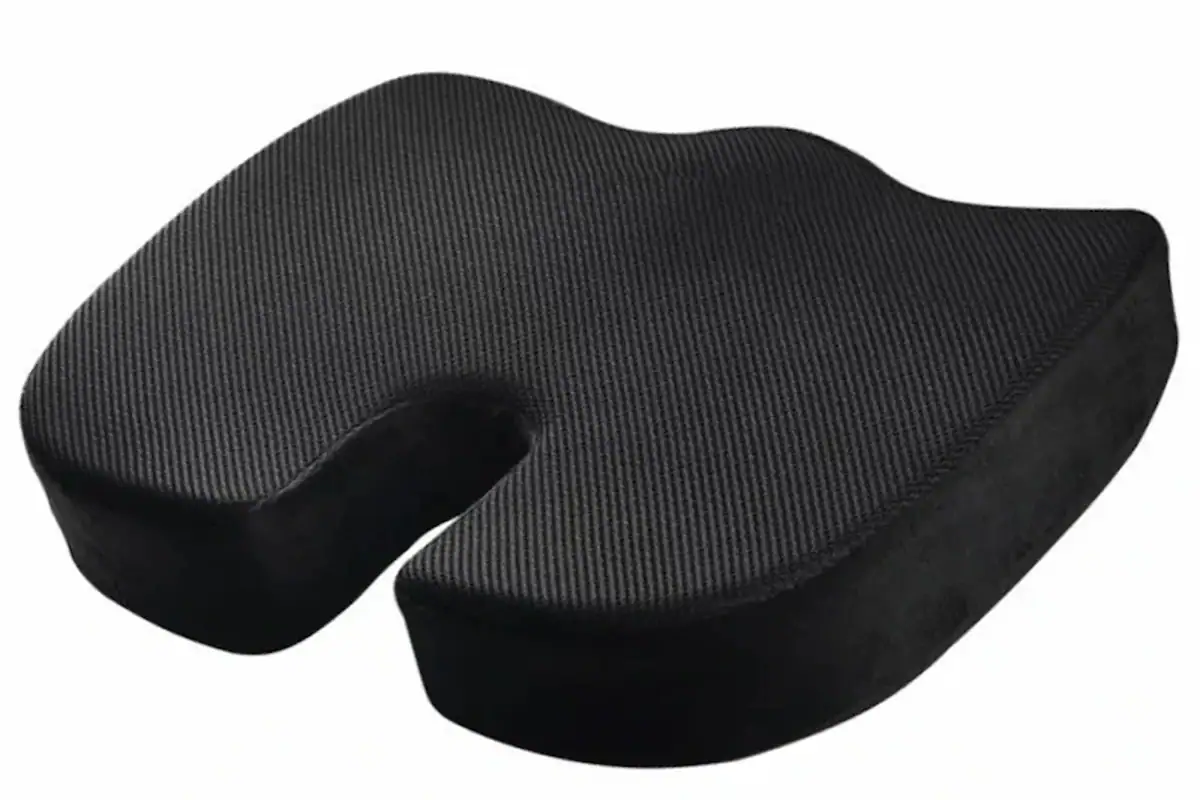
Walk into a pharmacy and ask about sitting pain, and someone will hand you a donut pillow. This is usually the wrong tool for a pilonidal cyst.
Donut cushions were designed for hemorrhoids. The hole sits in the center, under the perineum. Your problem is further back and higher up, at the top of the cleft. On a donut, the rear ring of the cushion can press directly into the area you’re trying to protect, which is why so many people buy one and end up more irritated than before.
What you want is a cushion with a cutout at the back, sometimes sold as a coccyx cushion or U-shaped cushion. The cutout removes contact behind your sit bones so nothing presses on the cleft at all. Two things matter when you’re choosing one:
Foam firmness. Memory foam that’s too soft bottoms out under your weight and you end up sitting on the chair anyway. It should compress, not collapse.
Cutout depth. A shallow notch relieves the tailbone tip but can still contact the pilonidal site above it. Deeper is better for this specific condition.
Finding one that gets both right is harder than it should be, which is honestly why we ended up building our own.
The Float is a firm cushion with a deep rear cutout positioned for the pilonidal site specifically, not the shallow center hole you get on a drugstore donut. It’s our product, so take the recommendation with that in mind, but the two criteria above are what matter whichever cushion you land on.
And if you don’t have a cushion yet, a folded soft towel with the back edge rolled down can work as a temporary solution as well.
Getting through a full workday
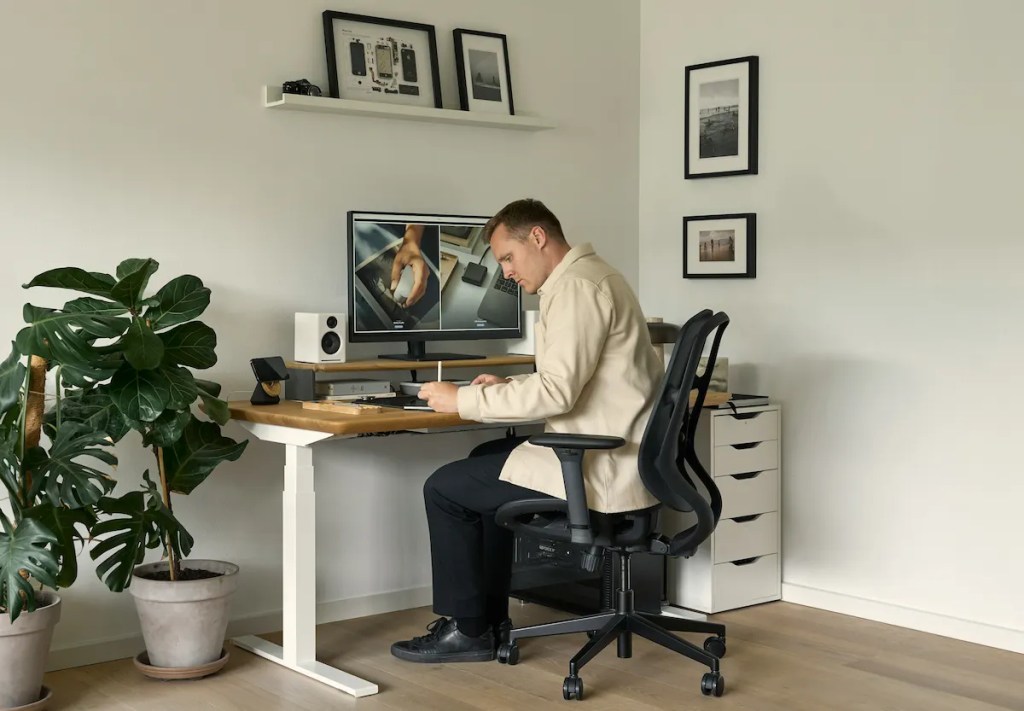
A few habits make eight seated hours survivable.
Set a recurring 25-minute timer and stand when it goes off, even if it’s just to refill your water. Take calls standing if you can.
Wear loose, breathable clothing. Tight jeans and synthetic underwear press fabric against the area and trap sweat, and a warm, damp environment is what lets the irritation build. Cotton and a looser fit go a long way here.
Keep the area clean and dry. If you can, change out of sweaty clothes after your commute or lunchtime walk.
In the evening, a warm compress can take the edge off after a long day of pressure. We covered exactly how to do that in our guide to using a warm compress on a pilonidal cyst.
What about sitting after surgery?
Post-surgery sitting rules depend entirely on which procedure you had, and surgeons genuinely disagree here. Some restrict sitting for a week or two after an excision. Cleft-lift surgeons often encourage normal sitting from day one, because the incision sits away from the pressure line. The American Society of Colon and Rectal Surgeons covers the range of procedures if you want to understand what was done to you.
The only correct answer: follow your surgeon’s instructions over anything you read online, including this post.
When sitting pain means see a doctor
Discomfort while sitting is normal with this condition. These signs are not:
- The swelling is growing day over day
- Redness is spreading outward from the site
- You have a fever or feel generally unwell
- Pus or blood is draining, or the area feels hot to the touch
Those point to an active infection, and an infected pilonidal cyst usually needs draining by a doctor rather than home management. The NHS recommends seeing a doctor promptly once infection signs appear. And if the cyst bursts on its own, we’ve written a full guide on what to do when a pilonidal cyst pops.
What aggravates a pilonidal cyst?
Pressure, friction, moisture, and heat. In practice that means long sitting sessions, hard surfaces, tight clothing, sweaty workouts without a shower after, and long drives. Anything that presses on the area or keeps it damp gives the inflammation more to work with.
How long does it take for a flare-up to calm down?
A mild flare-up often settles within a few days to a week if you take pressure off the area, keep it clean, and use warm compresses. If it’s getting worse after two or three days instead of better, or infection signs show up, that’s a doctor visit rather than a waiting game.
Does it hurt to walk with a pilonidal cyst?
Usually much less than sitting. Walking doesn’t put direct pressure on the site, and most people find movement is the comfortable part of their day. If walking is genuinely painful, the cyst may be significantly inflamed or infected and worth getting checked.
Can I live my whole life with a pilonidal cyst?
Some people have a pilonidal dimple or a quiet cyst that never causes serious trouble, and managing it with good habits is realistic. But repeated infections tend to keep coming back, and each flare-up can extend the sinus tracts under the skin. If you’re on your second or third infection, it’s worth reading about your options in our complete guide to pilonidal cyst treatments.
The bottom line
You can’t make a pilonidal cyst enjoy chairs. But leaning forward, standing up often, sitting on something soft with a rear cutout, and ditching the tight jeans will get you through most days without much drama. The one thing worth watching: if the pain is climbing week over week instead of holding steady, stop managing it at home and get it looked at.
Want the full playbook for managing this without surgery? Download our free guide, You Don’t Have to Get Cut Open, and get everything we know in one place.
Leave a Reply