After your pilonidal cyst surgery is done, you might have second thoughts every time you see a chair. Is sitting down going to undo everything the surgeon just did?
Maybe you’ve already tried and discovered that lowering yourself onto a wound in that exact location is its own special experience.
Many guides provide various different answers to this questions. And that is because when you can sit depends almost entirely on which procedure you had. This post breaks it down by surgery type, covers how to sit when you have no choice, and answers the question every post-op patient ends up asking from the couch: what do I actually sit on?
Quick answer: when can you sit after pilonidal surgery?
Most people can manage short periods of careful sitting within a few days, but the real timeline depends on your procedure. Cleft lift patients are often encouraged to sit normally right away, while open excision patients may need 1 to 3 weeks before regular sitting feels manageable. Your surgeon’s instructions override any general timeline, including this one.
The timeline depends on which surgery you had
This is the part most advice skips. “Pilonidal surgery” covers several very different procedures, and their sitting rules don’t match.
Procedure
Typical sitting guidance
Incision and drainage (I&D)
Usually short sitting the same or next day. The wound is small.
Open excision (wound left open to heal)
Short, careful sitting within days. Comfortable sitting often takes 1 to 3 weeks, and long sessions stay uncomfortable until the wound has closed substantially.
Closed excision (stitched shut)
Careful sitting after 1 to 2 weeks in many cases. Direct pressure on the incision line too early can stress the stitches, and this technique already carries a higher wound breakdown risk.
Cleft lift (Bascom)
Many cleft lift surgeons encourage normal sitting from day one. The incision is moved off the midline, away from the pressure zone.
Two things worth knowing about that table. First, the ranges are wide on purpose. Wound size, your build, and your surgeon’s preferences all shift the numbers, which is why the American Society of Colon and Rectal Surgeons describes recovery expectations per procedure rather than giving one universal timeline. Second, if your discharge papers say something different from this table, your discharge papers win. Every time.
The best way to sit after surgery (when you have no choice)
Even in the careful weeks, life demands some sitting. Car ride home, toilet, meals. The technique is about keeping weight off the wound, not avoiding chairs entirely.
Lean forward onto your thighs. Sit on the front half of the seat, feet planted, upper body tilted forward. Your weight loads through your thighs instead of the surgical site. This is the default position for the first days.
Favor one side. Shifting onto one buttock lifts the midline off the seat. Alternate sides so neither hip does all the work.
Keep early sessions short. Ten to fifteen minutes, then stand or lie down. Time limits matter more than perfect technique. Lying on your side or stomach stays the most comfortable option for most of the first week, and there’s no prize for toughing out a chair.
One reassuring note: getting up and moving is not the enemy. Gentle walking is actively good for healing and circulation. According to the Cleveland Clinic, it’s prolonged pressure and friction on the area you want to avoid, not movement itself.
What to sit on after pilonidal cyst surgery
The question every recovering patient googles from the couch. A few options, best to worst.
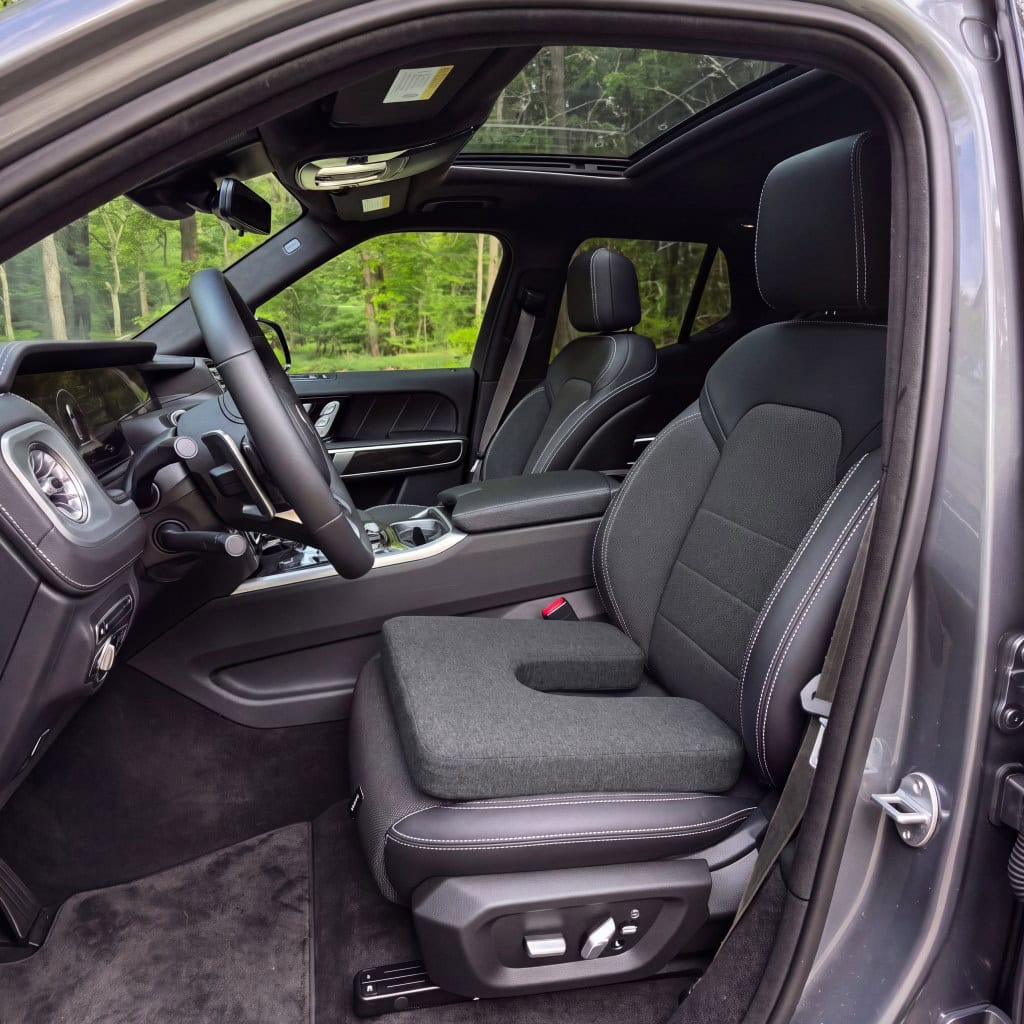
A cushion with a rear cutout is the best tool for this specific wound. The cutout removes contact behind your sit bones, so the surgical site touches nothing at all. Look for a deeper cutout rather than a shallow tailbone notch, because the pilonidal site sits higher in the cleft than the coccyx tip, and firm memory foam that compresses without collapsing under your full weight.
A donut pillow is the one to skip, even though it’s the first thing relatives buy you. Donuts were designed for hemorrhoids, with the hole under the perineum. But your pilonidal wound is further back, and the rear ring of a donut can press directly on the incision, which is the opposite of the job.
This is the exact problem we built The Float to solve. It’s a firm cushion with a deep rear cutout positioned for the pilonidal site, so nothing touches the wound while you heal. It’s our own product, so factor that in, but the cutout-depth point holds no matter which cushion you choose.
Toilet sitting deserves a mention as well, because it’s the one you can’t opt out of. Forward lean applies here too, and a small footstool under your feet changes the angle enough to matter.
More on that in the FAQ below.
Getting back to driving and desk work
Driving has extra rules, and they’re not just about comfort. You need to be off strong prescription painkillers, able to sit for the whole journey, and able to slam the brakes without hesitating. For most people that lands somewhere between a few days and two weeks depending on the procedure. The trip home from the hospital doesn’t count, because you shouldn’t be the one driving it.
For desk work, the honest answer is that your return date depends more on your chair tolerance than your job. Short remote days with a cutout cushion and hourly breaks are realistic well before a full office day is. If your work allows it, stagger the return: half days first, standing for calls, lying down at lunch. The NHS notes recovery time varies with the procedure and the person, so treat your first full sitting day as an experiment, not a commitment.
When sitting pain means call your surgeon
Post-op soreness while sitting is expected. These are not:
Pain that’s increasing day over day instead of easing
Fresh bleeding or discharge that’s getting heavier, smells bad, or turns green
Spreading redness or warmth around the wound
Fever or feeling generally unwell
A wound that was closing and has started opening
Those point toward infection or wound breakdown, and both are common enough after pilonidal surgery that surgeons expect the call. The Mayo Clinic lists worsening pain, redness, and drainage among the signs that need medical attention rather than watching and waiting.
How many days of bed rest do you need after pilonidal surgery?
Usually none in the strict sense. Most surgeons want you up and gently walking the same day or the day after, because movement helps circulation and healing. What you’re limiting is sitting pressure on the wound, not activity in general.
Can I drive myself home after pilonidal cyst surgery?
No. You’ll have had anesthesia or sedation, and most hospitals won’t discharge you without a designated driver. Arrange for someone else to drive, and plan on side-leaning for the trip.
Can I sleep on my back after pilonidal surgery?
Most surgeons recommend side or stomach sleeping at first, since back sleeping puts direct pressure on the wound for hours at a stretch. If you’re a committed back sleeper, ask your surgeon when it’s safe to return to it.
Can you sit on the toilet after pilonidal cyst surgery?
Yes, and you’ll have to. Lean forward slightly so your weight goes through your thighs rather than straight down onto the wound, and a small footstool under your feet changes the angle enough to help. Don’t strain. If post-op painkillers have left you constipated and this is becoming a real problem, call your care team rather than pushing through it.
Conclusion
Sitting after a pilonidal surgery is a procedure question first and a technique question second. Find your surgery type in the table above and follow your surgeon’s numbers over anyone else’s, including ours. For the sitting you can’t avoid in the meantime: keep it brief, lean forward, and put something with a gap at the back underneath you.
It gets better faster than most people expect. The first week is the worst of it.




Leave a Reply